Free templateBE FAST stroke poster
Stroke: BE FAST
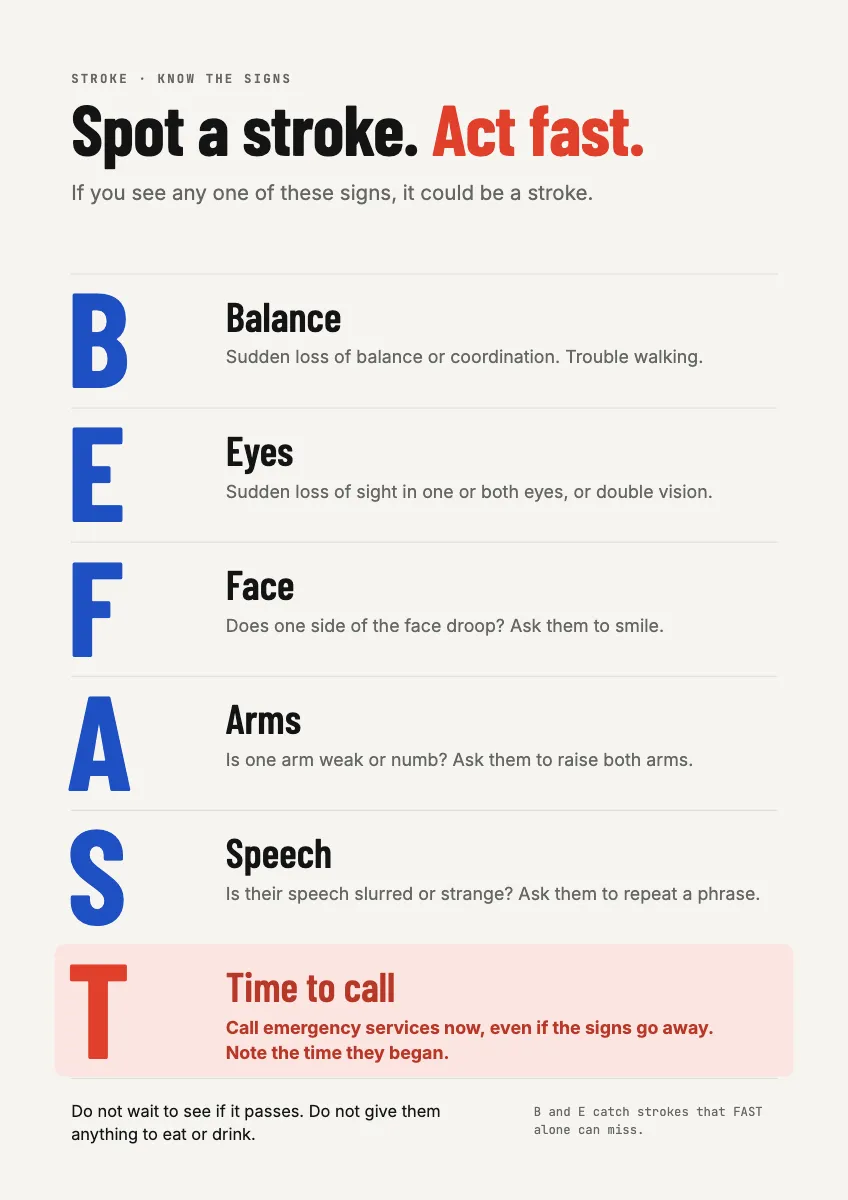
A public poster set as six giant letters, one sign of stroke each, with the T in colour because it is the action.
Free. It opens in the Motionix editor as your own copy.
Download the pictureWebP, 848 × 1200, free to use. To change the words or colours, open it in the editor.
- Size
- 1240 × 1754 px
- Pages
- 1
- Motion
- Yes, plays live and in GIF or video
- Category
- Health and science
What it shows
- Typographic poster
- Readable across a room
- One accent for the action
Good for
How to use it
- Open the template. It becomes a project in your account.
- Change the words, colours and pictures. Every part is an ordinary shape, line or text box.
- Press Play to watch it build, then present it or export it.
What is a BE FAST stroke poster?
A BE FAST stroke poster teaches the public to recognise the signs of a stroke using six letters: Balance, Eyes, Face, Arms, Speech and Time. The first five are sudden symptoms to look for, and Time is the action: call emergency services immediately. BE FAST extends the familiar FAST message by adding balance and eye problems, which can be the only signs of some strokes.
When it helps
- A GP or hospital waiting room poster that people read while they wait.
- First aid training sessions covering how to spot a stroke and what to do.
- Community centres, pharmacies and workplaces running a stroke awareness campaign.
- Care homes reminding staff of the signs during every shift.
Tips
- Use one accent colour only, for Time; when every letter is a different colour, nothing tells the reader which part is the action.
- Keep the word sudden in the descriptions, because a sudden change is what separates stroke signs from long-standing problems.
- Base the wording on a recognised stroke charity or health service source, so the poster matches what people hear elsewhere.
How to make a BE FAST stroke poster
Set the letters large
Make each of the six letters big enough to read from across a room, one per row, so the acronym itself carries the message.
Write one sign per letter
Beside each letter, describe the sign in a few words and add a simple test, such as asking the person to smile or raise both arms.
Make Time the call to action
Give the T a distinct colour and tell readers to call emergency services now, even if the signs go away, and to note when they started.
Add what not to do
Include a short line saying not to wait to see if it passes and not to give the person anything to eat or drink.
Use the local emergency number
Print the number for the country where the poster will hang, such as 999 in the UK, and check it before printing copies elsewhere.
FAQQuestions
Common questions.
What does BE FAST stand for?
Balance: sudden loss of balance or coordination. Eyes: sudden loss of sight or double vision. Face: one side drooping. Arms: weakness or numbness in one arm. Speech: slurred or strange speech. Time: call emergency services immediately and note when the signs began.
What is the difference between FAST and BE FAST?
FAST covers face, arms, speech and time, the signs used in the main UK public campaign. BE FAST adds balance and eyes at the front, because some strokes, particularly at the back of the brain, cause dizziness or sight problems without the classic FAST signs.
What should you do if you think someone is having a stroke?
Call emergency services straight away, 999 in the UK, even if the symptoms seem to improve. Note the time the signs started, keep the person safe and comfortable, and do not give them food or drink. Stroke is a medical emergency and fast treatment matters.
More health and science templates
Patient guides, care pathways and the life sciences.