Free templateHiring process diagram
How we hire
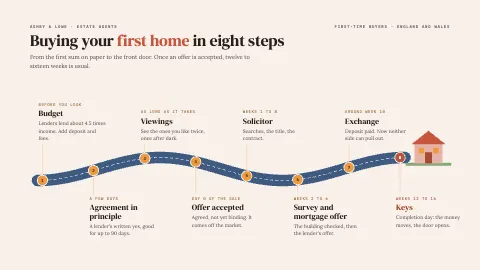
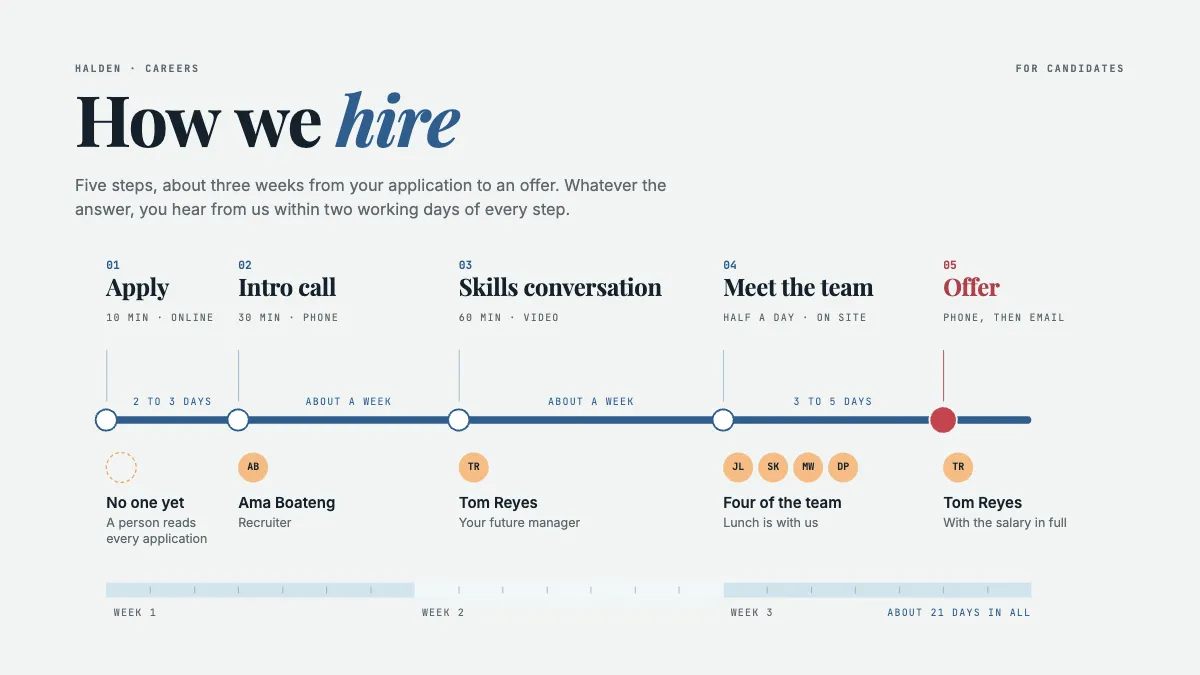
A candidate guide drawn like a train line: five stations across three weeks to scale, and who you meet at each.
Free. It opens in the Motionix editor as your own copy.
Download the pictureWebP, 1200 × 675, free to use. To change the words or colours, open it in the editor.
- Size
- 1920 × 1080 px
- Pages
- 1
- Motion
- Yes, plays live and in GIF or video
- Category
- Processes
What it shows
- Timeline to scale
- Route that draws itself
- Calm editorial type
Good for
How to use it
- Open the template. It becomes a project in your account.
- Change the words, colours and pictures. Every part is an ordinary shape, line or text box.
- Press Play to watch it build, then present it or export it.
What is a hiring process diagram?
A hiring process diagram maps every stage a candidate passes through, from application to offer, with how long each stage takes and who they will meet. Shared with candidates, it sets expectations and cuts down anxious chasing emails; used inside the company, it shows recruiters and managers where applicants drop out or wait too long.
When it helps
- A careers page showing applicants the interview stages before they decide to apply.
- A recruiter briefing a hiring manager on what each round should assess and how quickly to give feedback.
- A people team measuring time to hire and finding which stage holds candidates longest.
- Sending shortlisted candidates a clear plan of the next three weeks with their invitation.
Tips
- Tell candidates what each stage assesses. People prepare better and perform more like themselves when they know whether to expect technical questions or a conversation about values.
- Keep the number of interview rounds as low as the decision allows. Each extra round adds days and gives strong candidates time to accept another offer.
- Update the diagram whenever the process changes. A published process that no longer matches reality damages trust more than having none at all.
How to make a hiring process diagram
List every stage
Write down each stage a candidate goes through, such as application, screening call, skills interview, meeting the team and offer. Include stages that happen out of sight, such as reviewing applications.
Measure the real gaps
Use recent hires to find how long each stage and each wait actually takes. The gaps between interviews are usually longer than the interviews themselves.
Draw it on a time scale
Space the stages by days or weeks rather than evenly, so a candidate can see the whole process takes about three weeks, not five quick steps.
Say who they meet
Under each stage, name the role of the interviewer and the format and length: a thirty minute phone call, an hour on video, half a day on site.
State your promises
Add the commitments you will keep at every stage, such as replying within two working days whatever the outcome. Only publish what the team will actually honour.
FAQQuestions
Common questions.
What are the stages of the hiring process?
A typical process runs from identifying the need and writing the job description, through advertising, screening applications, a first call, one or more interviews or assessments, and references, to the offer and onboarding. Candidates usually see only the stages from application to offer.
How long does a typical hiring process take?
It varies widely with the role and the employer, from a few days for some hourly jobs to two months or more for senior positions. Many professional roles take several weeks from application to offer. Measuring your own recent hires tells you more than any published average.
Should you share your interview process with candidates?
Yes, in most cases. Telling candidates the stages, timings and who they will meet helps them prepare, tends to reduce withdrawals and no-shows, and makes the process fairer for people with no insider knowledge of how the company hires.
More processes templates
Flowcharts, procedures and step-by-step journeys.