Free templateCertificate of completion
Course certificate
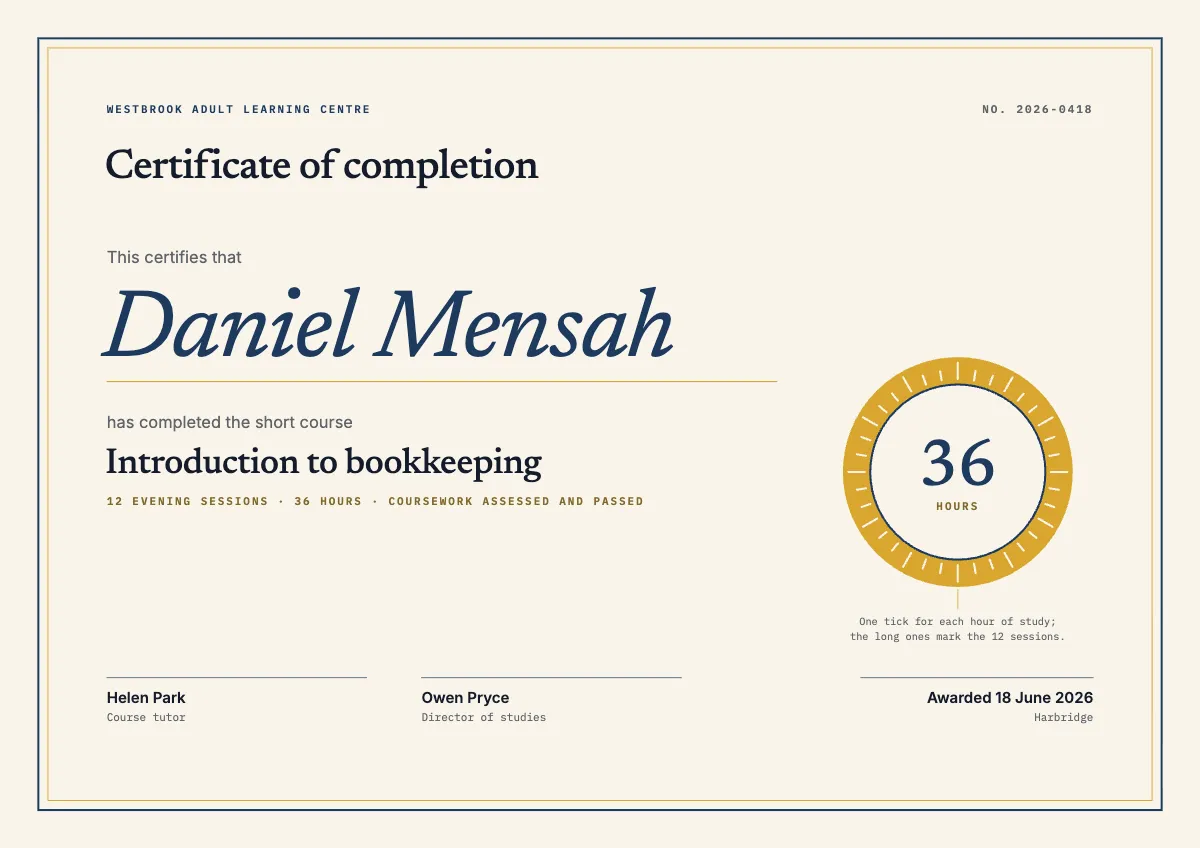
A certificate of completion set like a title page, with a fine-line seal of 36 ticks, one for every hour of the course.
Free. It opens in the Motionix editor as your own copy.
Download the pictureWebP, 1200 × 848, free to use. To change the words or colours, open it in the editor.
- Size
- 1754 × 1240 px
- Pages
- 1
- Motion
- A still page; add motion if you like
- Category
- Posters and print
What it shows
- A seal computed from the course
- Signature lines
- True italic name
Good for
How to use it
- Open the template. It becomes a project in your account.
- Change the words, colours and pictures. Every part is an ordinary shape, line or text box.
- Add motion if it helps, then present it or export it.
What is a certificate of completion?
A certificate of completion is a document confirming that a named person has finished a course, workshop or training programme. It records who issued it, the person's name, the course title, the date and usually the length of study, and it is signed by someone with authority, such as the tutor or the head of the organisation. It shows that a course was completed, not that a formal qualification was awarded.
When it helps
- An adult learning centre awarding certificates at the end of an evening course.
- A trainer giving participants proof of attendance for professional development records.
- A workplace confirming that staff completed required in-house training.
- A community workshop marking the end of a course with something to take home.
Tips
- Never let the border or seal compete with the name; decoration should frame the document, not fill it.
- Keep a register of certificate numbers and recipients, so you can confirm one is genuine when an employer asks.
- Avoid words like qualified or accredited unless the course really is; overstating a completion certificate misleads the people who rely on it.
How to make a certificate of completion
Name the issuing organisation
Put the organisation's name at the top, with its location, so anyone reading the certificate later knows who stands behind it.
Make the name the focus
Set the recipient's full name larger than anything else except the title, and check its spelling against their records before printing.
Describe what was completed
Give the course title and its substance, such as the number of sessions, total hours and whether work was assessed.
Add signatures, date and number
Include signature lines with printed names and roles, the date awarded, and a certificate number so the record can be checked.
Print on good stock
Use A4 landscape, 297 x 210 mm, on heavy paper or card, and leave generous margins if the certificate is likely to be framed.
FAQQuestions
Common questions.
What should a certificate of completion include?
The issuing organisation, the words certificate of completion, the recipient's full name, the course title, the length or hours of study, the date of completion, and signatures with names and roles. A unique certificate number makes it possible to verify later.
Is a certificate of completion a qualification?
Not usually. It confirms someone finished a course. A formal qualification is awarded by a recognised awarding body after assessment against set standards, and in England regulated qualifications are listed by Ofqual. Some courses lead to both, so the certificate should say which.
What paper should certificates be printed on?
A heavier paper or light card gives a certificate a solid feel and keeps it flat in a frame. Matt or textured stock in white or cream is common, with a weight that a desktop printer can still feed if printing in house.
More posters and print templates
Menus, notices, invitations, signs and certificates.